Ash Layers of the Thera Volcanic Series: Stratigraphy, Petrology and Geochemistry
Although the bulk rock analyses show some variation, suggesting that the Bo magma was more evolved, the glass compositions are uniform and more silicic than the bulk rock. C.T.-2 and Bu-1 units contain significant amounts of admixed mafic xenocrysts, but the Bo samples are less contaminated with basic material. Pyroxene phenocrysts in all units have high Mg/Fe ratios. The C.T.-2 and Bu-1 units are only weakly zoned in bulk composition across their relatively thin (506-748 cm) stratigraphic sections. The thicker (25.60 m) Minoan Pumice shows evidence of magma chamber inversion during eruption, although the composition of the glass remains uniform, and the zonation is probably due to phenocryst variations. These rhyolitic magmas do not represent intracrustal melts. They were produced by crystal fractionation of more mafic magma, involving separation of plagioclase, clinopyroxene and magnetite. Gradual assimilation of basement rocks during crystallization of the magma probably enhanced the volume of evolved magma without drastically affecting the fractionation trends. Several lines of evidence support this conclusion. These include the smooth major and trace element trends from basalt, through andesite and dacite, to rhyolite, the correlation of the magnitude of the Eu anomaly with other major and trace element characteristics, the parabolic compatible element trends and the similarity of Sr and Nd isotopic compositions between the mafic and silicic eruptives compared to those of the country rocks. Although assimilation of country rock may have been minor relative to the original mass of basaltic magma (8-15%), this is of the same order as the volume of rhyolite produced by 85% crystallization of basalt. Because the assimilation was gradual, crystallization largely controlled the composition of the residual liquid, and the principal effect of the assimilation would have been to increase the volume of rhyolite. Trace element modelling suggests that many normally incompatible elements (e.g. REE, Zr, Hf) had very high bulk distribution coefficients (KD) during fractionation, but accessory phases are not required to produce these relatively high KD values, in view of the large amount of augite inferred for the crystallizing cumulate assemblage.
INTRODUCTION
The silicic pyroclastic rocks of the volcano Thera have played an important role in the volcano's history. Early studies (Fouqué 1879; Reck 1936) distinguished three pumice horizons, Bu (lower), Bm (middle) and Bo (upper) respectively, in the volcanic stratigraphy. These have been the subject of a number of geological and petrological investigations (Ninkovich and Heezen 1965; Keller and Ninkovich 1972; Gunther and Pichler 1973; Pichler and Kussmaul 1972, 1980; Vitaliano et al. 1978).
Other workers have investigated the mineralogy and chemistry of the silicic pyroclastics of the lower Pumice, Bu (Gunther and Pichler 1973; Pichler and Kussmaul 1972; Pichler 1973; Keller 1971), and of the Upper Pumice, Bo (Ninkovich and Heezen 1965; Vitaliano et al., 1978). The mineralogy and major element chemistry of the Upper Pumice has been described by Vitaliano et al. (1978) and the stratigraphy alone of the Middle (Bm) and Upper (Bo) Pumices have been described by Heiken and McCoy, Jr (1984).
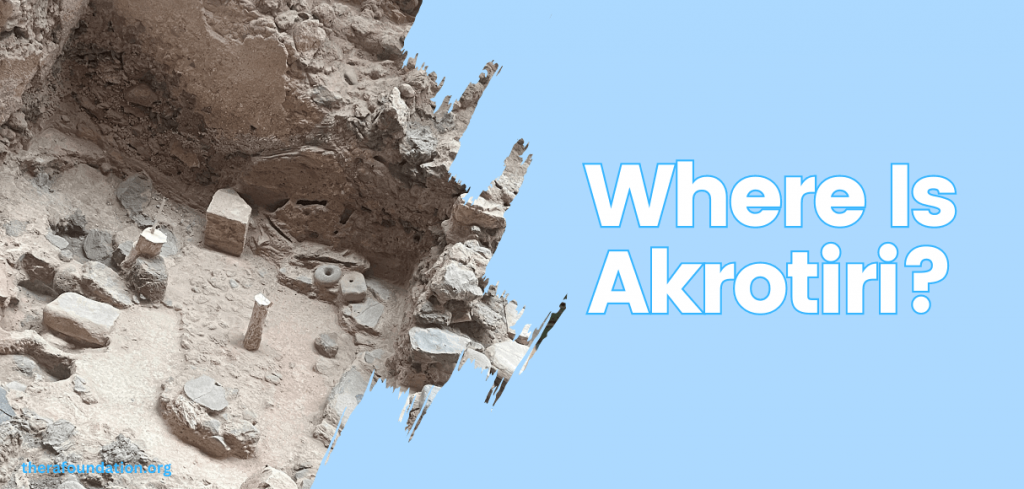
However, recent mapping (Druitt and Sparks 1982; Druitt 1985) has found that the pumice horizons in the strata of the volcano are more numerous than the three previously recognized and may represent a number of explosive epochs in Thera's active eruptive history. A study of the chemistry and mineralogy of these rocks, comparable in detail to that done for the lavas of the volcano by Nicholls (1971), Mann (1983) and by Huijsmans et al. (1988), is of importance in view of the prominent role of these rocks in the volcano's stratigraphy and its evolution. As a contribution toward this, we discuss in this report the stratigraphy, petrography and chemistry of three of the pumice units. Two of them, C.T.-2, and Bu-1 from the lower (Cycle 1) part of the Thera Formation (Druitt 1988, pers. comm.), are exposed in the west-facing cliff of the island Thera. Both are accessible from the road to Athinios. The third, the Upper or 'Minoan Pumice' layer (part of Cycle 2) is exposed in the quarry just south of Phira. One sample (E) was collected at the excavation at Akrotiri; it represents a thin layer of ash resting on top of the dwellings and at the base of Minoan tephra and appears to be part of it, but is apparently not represented at the Phira quarry site.
Sampling methods:
A question of crucial importance in the petrological and geochemical interpretation of the pumice layers and their parent magmas is the possibility of the occurrence of xenoliths derived from pre-existing wall rocks, which may reflect previous volcanic episodes, or basement material. Sampling the cliff-wall pumice layers for chemical analysis required special care to avoid, as far as possible, contamination by more mafic earlier eruptive products and, in the case of the C.T.-2 and Bu-1 layers, possible alkali enrichment as a result of spray from storm waves. After selecting a region for sampling, a zone approximately 15 cm wide was physically stripped to a depth of about 0.5 to 1 cm. Sampling of ash and, where encountered, pumice fragments was then begun from the base of the column and continued upward. By collecting contiguous intervals the entire tephra layer was sampled.
STRATIGRAPHY
Cape Therma-2 Pumice: The lowest pumice unit studied by us, the Cape Therma-2, C.T.-2 (Druitt pers. comm., 1988), crops out in the cliff face north-east of the Athinios landing, where it is 506 cm thick. It is accessible from the road which leads down the cliff to the landing. There it is separated by a few centimetres of scoria and rubble, presumably part of the Cape Therma Series, from the underlying Upper Triassic metamorphic rocks (Pichler and Kussmaul 1980). It has been assigned (Druitt pers. comm., 1988) to the lower part of the Thera Formation.
The stratigraphic section (Fig. 1) begins with 1 m thick layer of block pumice and pumiceous tuff which is underlain by the rubble mentioned above. The pumice is overlain by 1.75 meters of lapilli (2-64 mm diameter) and pumice-bearing tuffs of varying shades of grey which acquire a light tan cast near the top of the unit. The pumice blocks (> 64 mm) in this segment of the layer, which are much less common in this unit than they are in the underlying basal part of the section, are as much as 7 cm long. Xenoliths of 'andesitic' nature which are sparse in the lower part of this unit, are common in the upper part. This unit is succeeded by 2 m of white, grading into pinkish-white lapilli tuff with occasional pumice blocks that are as much as 5 cm long. Xenoliths are exceedingly sparse in this unit. The uppermost 0.25 m of the section is a pink tuff with reverse graded bedding. The last unit appears to us to be of phreatomagmatic origin.
Bu-1 Pumice: The Bu-1 Pumice (Fig. 2) is 748 cm thick. The basal member is a brown tuff, 50 cm thick, with lapilli and pumice fragments, which is underlain by 10 to 15 m of lavas and pyroclastics of the Cape Therma Scoria (Pichler and Kussmaul 1980). The latter serves to separate the Bu-1 pumice from the underlying Cape Therma-2 Pumice. The brown tuff unit is overlain by 360 cm of tuff, pumice and scattered xenoliths constituted as follows: 60 cm of grey to greyish white pumice and lapilli tuff; 200 cm of grey to reddish-grey pumice, with pumice clasts up to 1.5 cm and sparse lithic fragments; 56 cm of similar material in which the pumice fragments are as much as 2 cm long and in which the lithic fragment content has increased; the remainder of this member is a grey to pinkish-grey ash. The entire columnar section is topped by 250 cm of light grey tuff with lapilli, fragments of pumice and lithic fragments scattered throughout it; this member appears to be of phreatomagmatic origin.
The Minoan (Bo) Pumice: The Bo Pumice (Fouqué 1879), also known as the Minoan Ash (Fig. 3), was measured and sampled in the southern part of the quarry near Phira. At this location the columnar section is 25.60 m thick and consists of three members: the basal 'Rose Pumice'; the 'base Surge' member, of probable phreatomagmatic origin (Heiken and McCoy, Jr 1984) and the Upper or 'Chaotic' member, also considered of phreatomagmatic origin (Heiken and McCoy, Jr 1984). Our study of the Bo Pumice is sufficiently similar in detail to those given earlier by Fouqué (1879); Reck (1936); Pichler and Kussmaul (1972, 1980) and especially to that given recently by Heiken and McCoy, Jr (1984) so that we do not give a detailed description in this report. The basal, or 'Rose Pumice', here 580 cm thick, is underlain by a soil zone which had developed before the paroxysmal eruption of Minoan time. The dominant components of the unit, white to light grey block pumice and ash, are tinged with pink due to slight iron oxide staining. Lithic fragments of 'andesitic' composition are distributed throughout the member. The thin layer (some 6-10 cm thick) of fine ash which underlies the 'Rose Pumice' at the Akrotiri excavation site (our sample E) was found at this location. The material in Sample E must just precede the deposition of the main 'Minoan' Ash layer as represented at the Phira quarry site.
The overlying 'Base Surge' member, the first phreatomagmatic zone in the Bo Pumice at the Phira quarry (Pichler 1973; Heiken and McCoy, Jr 1984), is 665 cm thick and composed of white lapilli ash, block pumice fragments (up to 10 cm diameter) and lithic fragments. The xenoliths, some as large as 25 cm, are sparse in the lower layers of the member but become more numerous in the upper layers. Occasionally, the xenoliths are rimmed with a thin alteration rind. Dune and antidune bedding are prevalent throughout the member.
The upper 1290 cm of the section, the 'Chaotic' member is a white to pinkish-grey lapilli-bearing tuff with blocks of pumice and lithic fragments. The xenoliths are as much as 42 cm in longest dimension. They are common in the lower part, sparse in the middle reaches and increase in content again in the upper part of the member. This member is also considered to be of phreatomagmatic origin (Heiken and McCoy, Jr 1984).
PETROGRAPHY
Petrographic descriptions and mineral compositions have been determined by optical microscopy and electron microprobe. The mineral compositions are summarized here and will be discussed in detail elsewhere. Glass compositions are presented in the following section where they are discussed together with the major element chemistry of the bulk samples.
Electron microprobe analysis of minerals and glasses: Mineral fragments and glasses in the C.T.-2 Pumice and the Bu-1 Pumice units were studied by electron probe microanalysis of powder samples which were sieved and washed to remove fines, mounted in epoxy resin blocks, and polished. Energy-dispersive analyses were carried out with an Si (Li) detector fitted to a Bausch and Lomb SEMQ-2 microprobe. A low electron beam current (15 nA), defocusing of the beam where possible, and slow translation of fragments under the beam during analysis of glass allowed loss of Na intensity to be avoided. Nevertheless, Na and K contents of glasses in these units are variable, probably due to partial alteration in these older units.
Phenocrysts and glass in a single pumice fragment from each Bo Minoan Pumice member were also studied in standard polished thin sections by electron microprobe, using an ARL-EMX instrument fitted with an Si (Li) detector. Although a beam current of 100 nA was used, beam defocusing and scanning of large areas of glass again avoided loss of Na intensity during analysis. The resulting analyses suggest that glass in individual pumice fragments is quite homogeneous.
C.T.-2 Pumice: The grey basal layers of the C.T.-2 Pumice (98 cm thick), contain 2-25% crystals and 75-98% glass (r.i. = 1.513 ± 0.002). The felsic crystal fraction, which can be as much as 15% of the sample, consists entirely of plagioclase (An81-34). The ferromagnesian fraction, up to 5% of the sample, consists of augite (Mg75-64), hypersthene (Mg73-54) minor Fe-rich pigeonite (Mg42-35), and less than 0.5% hornblende. The opaque mineral fraction, 3-5% of the sample, consists of magnetite and ilmenite. The overlying 98 cm is a layered crystal tuff composed of 42% plagioclase, 5% augite and hypersthene, 3% opaques and 50% glass. The crystalline fraction of the upper 300 cm of the section is 2-18% of which 15% is plagioclase (An56-33), 2% augite (Mg70-65) and hypersthene (Mg64-53) and 1% Ti-magnetite and ilmenite. Xenoliths are common only in the lower 72 cm of this member.
Bu-1 Pumice: Crystal fragments constitute 5 to 25% of the Bu-1 (lower) Pumice unit. The felsic fraction, 3-20% of the member, is plagioclase (An92-19) and rare sanidine. The ferromagnesian fraction, 2-5%, consists of augite (Mg85-51), hypersthene (Mg71-47), rare olivine (Mg82-62), Ti-magnetite, ilmenite, apatite and occasional hornblende. Glass (75-95%, r.i. = 1.514 ± 0.002) in the form of shards and pumice fragments completes the assemblage. Xenoliths are sparse and scattered throughout the member.
Bo Minoan Pumice: All three members of the Bo Pumice have somewhat similar mineralogy throughout, differing mainly in the quantity of the crystalline constituents, but also in the gradual increase in An content of plagioclase and Mg-number of ferromagnesian phases in the successive members. The major constituent of the Bo Pumice is also glass (80-95%, r.i. = 1.509 ± 0.002) which occurs as shards and ash size long bubble-type pumice fragments. The crystalline content ranges from 5 to 20%. The predominant mineral phase is plagioclase (An57-33 with occasional grains in the uppermost unit to An71). Rare grains of an alkali feldspar with the properties of high temperature albite (2V (-) < 40) were encountered in some of the samples. The ferromagnesian mineral component of the Minoan Pumice is never greater than 5%. Hypersthene (Mg67-54) occurs as euhedral microcrystals that are uniformly distributed throughout the column. The crystals may be green or pale pink, but never more than 1 mm long and occasionally exhibit faint pleochroism. Augite (Mg73-64),Ti-magnetite and ilmenite are rarer phenocryst phases, and apatite is a constant accessory mineral throughout the entire column.
Discussion:
Both phenocrystic and xenocrystic populations are suggested by these mineral data. It is difficult to imagine plagioclase as calcic as An92 and olivine and pyroxene as magnesian as Fo82 and En85, respectively, as anything other than xenocrysts derived from a more mafic parent (either magma or rock). This admixture of foreign material into the C.T.-2 and especially the Bu-1 units suggests that the bulk compositional data presented later must be interpreted with caution in terms of its significance for the magmatic evolution of these rhyolites.
Highly calcic plagioclase was not found in the Bo tuff, so we infer that the observed mineral grains represent predominantly magmatic phenocrysts, and the amount of any mafic contaminant in this unit must be small relative to the C.T.-2 and Bu-1 Pumices. Even so, the phenocrystic pyroxenes do seem unusually magnesian for such silicic rocks. Despite their relatively high Mg/Fe, however, pyroxene compositions in the Bo and C.T.-2 units are similar and span a restricted range of compositions which also suggests that these pyroxenes are magmatic phenocrysts rather than accidental xenocrysts. The regular distribution of plagioclase and pyroxene compositions across the thick Bo section, and the ubiquitous distribution of pyroxene as small euhedral grains throughout this unit, would also be consistent with a phenocrystic rather than xenocrystic origin for these mineral grains.
Pyroxene phenocrysts with relatively high Mg/Fe and limited compositional diversity have been observed in silicic calc-alkaline volcanics from a number of localities (Moll 1981, and references therein), and may reflect crystallization under conditions of high oxygen fugacity resulting in high Fe3+/Fe2+ ratios in the melt and competition for iron by magnetite.
MAJOR ELEMENT CHEMISTRY
Thirty-six samples of tephra, including sample E, were selected for major and trace element analysis: selection was based on careful examination with a petrographic microscope in order to guard against contamination by xenolithic inclusions. Major element analyses were carried out by Inductively Coupled Plasma Spectroscopy (ICP) following lithium metaborate fusion. The relative error is ± 2% of the amount reported. The average major element composition for each of the three pumice horizons is given in Table 1. Table 2 gives some representative analyses of glasses by electron probe. Tables 3, 4, and 5 give major element analyses and norms for the three suites of samples.
The SiO2 content of the Minoan (Bo) Pumice is higher than in either of the other two deposits (Tables 3 and 4). In contrast, Al2O3, TiO2, FeO, MnO, MgO and CaO are distinctly lower in the Bo Pumice, indicating that the Bo (Minoan) Pumice was more differentiated than the earlier units. This cannot be due to a simple variation in crystal content as all tuff units have about the same crystal contents and relative proportions of the mineral phases, although some of the variation in bulk composition between the three tuff units may be due to incorporation of mafic material into the rhyolitic magma as shown by the mineral compositions (previous section). Aside from enrichment in isolated samples of Bu-1 the content of Na2O drops to a plateau in C.T.-2 samples. This value is then maintained even in the Bo Pumice. K2O contents also show the same range throughout the three sequences. In the xenolith-free samples, some subtle differences are revealed, with the Bu-1 sample being lower in Al2O3, TiO2, FeO, and CaO, and higher in Na2O than the underlying Cape Therma (C.T.-2) Pumice, indicating that the magma was slightly more evolved.
TABLE 1: Average major element composition of C.T.-2. Bu-1 and Bo. Pumice deposits. Thera (Santorini), Greece. Data in wt%. Figures in parentheses indicate number of analyses averaged.
| C.T.-2 (10) | Bu-1 (9) | Bo (16) |
| SiO2 | 66.80 | 65.64 | 69.24 |
| TiO2 | 0.65 | 0.62 | 0.48 |
| Al2O3 | 16.32 | 16.19 | 15.33 |
| FeOt | 4.35 | 4.52 | 3.53 |
| MnO | 0.13 | 0.14 | 0.10 |
| MgO | 1.42 | 1.80 | 1.28 |
| CaO | 3.15 | 3.65 | 2.96 |
| Na2O | 3.95 | 4.54 | 3.87 |
| K2O | 2.87 | 2.68 | 2.83 |
| Total | 99.66 | 99.69 | 99.62 |
TABLE 2: Electron-probe analyses of glass. Data in wt%
C.T.-2 (Ave. 29) | Bu-1 B-2 | Bu-1 B5B | Bo Minoan Rose Pumice | Bo Minoan Base Surge | Bo (Minoan) Upper Unit | |
| SiO2 | 71.1 | 72.7 | 75.1 | 74.3 | 74.0 | 74.0 |
| TiO2 | 0.5 | 0.5 | 0.3 | --- | 0.2 | 0.2 |
| Al2O3 | 15.5 | 16.1 | 14.8 | 10.4 | 13.9 | 14.1 |
| FeO | 3.1 | 3.3 | 2.8 | 2.0 | 2.2 | 2.0 |
| MgO | 0.6 | 0.5 | 0.3 | 0.3 | 0.29 | 0.3 |
| CaO | 1.9 | 2.2 | 1.3 | 1.1 | 1.4 | 1.3 |
| Na2O | 3.6 | 2.1 | 2.0 | 4.9 | 4.7 | 4.8 |
| K2O | 3.7 | 2.4 | 3.3 | 3.4 | 3.4 | 3.3 |
| Total | 100.0 | 100.0 | 100.0 | 100.0 | 100.0 | 100.0 |
TABLE 3: Major element analyses for the Cape Therma (C.T.-2) Pumice. Data in wt%. *Xenolith-free samples.
| A1* | A2 | A3 | A4 | A5* | A6* | A7* | A8 | A9* | A10 |
SiO2 | 67.38 | 63.55 | 66.87 | 67.43 | 67.22 | 65.03 | 65.74 | 67.56 | 69.59 | 67.61 |
TiO2 | 0.65 | 0.78 | 0.71 | 0.62 | 0.65 | 0.68 | 0.69 | 0.63 | 0.53 | 0.57 |
Al2O3 | 16.07 | 17.04 | 16.31 | 15.88 | 16.26 | 17.16 | 16.61 | 15.90 | 15.49 | 16.68 |
FeOt | 4.25 | 5.40 | 4.19 | 4.19 | 4.38 | 4.63 | 4.66 | 4.06 | 3.50 | 4.04 |
MnO | 0.13 | 0.17 | 0.15 | 0.09 | 0.09 | 0.15 | 0.13 | 0.12 | 0.12 | 0.13 |
MgO | 1.21 | 2.12 | 1.45 | 1.13 | 1.40 | 1.53 | 1.47 | 1.11 | 0.97 | 1.78 |
CaO | 3.01 | 4.52 | 3.00 | 2.76 | 2.86 | 3.89 | 3.17 | 3.40 | 2.22 | 2.69 |
Na2O | 3.96 | 3.95 | 4.08 | 3.81 | 4.13 | 4.12 | 4.31 | 3.72 | 3.99 | 3.40 |
K2O | 3.07 | 2.18 | 2.81 | 3.23 | 2.78 | 2.55 | 2.86 | 3.14 | 3.32 | 2.71 |
Total | 99.73 | 99.71 | 99.79 | 99.14 | 99.77 | 99.74 | 99.64 | 99.64 | 99.73 | 99.61 |
|
|
|
|
|
|
|
|
|
| |
I1 | 0.91 | 1.10 | 0.99 | 0.88 | 0.92 | 0.95 | 0.97 | 0.89 | 0.75 | 0.80 |
Mt | 1.37 | 1.74 | 1.42 | 1.36 | 1.41 | 1.49 | 1.50 | 1.32 | 1.13 | 1.31 |
Or | 18.32 | 12.99 | 16.74 | 19.42 | 16.56 | 15.17 | 17.02 | 18.79 | 19.81 | 16.22 |
Ab | 35.92 | 35.78 | 36.94 | 34.81 | 37.39 | 37.26 | 38.98 | 33.84 | 36.19 | 30.93 |
An | 15.09 | 22.52 | 15.01 | 13.93 | 14.31 | 19.44 | 15.84 | 17.09 | 11.13 | 13.52 |
Di | --- | 0.08 | --- | --- | --- | --- | --- | --- | --- | --- |
Hy | 6.14 | 9.45 | 6.88 | 5.89 | 6.70 | 7.31 | 7.12 | 5.74 | 5.01 | 7.70 |
C | 0.84 | --- | 1.21 | 1.22 | 1.38 | 0.60 | 0.73 | 0.22 | 1.43 | 3.61 |
Q | 21.40 | 16.34 | 20.80 | 22.49 | 21.33 | 17.77 | 17.83 | 22.11 | 24.55 | 25.90 |
Total | 100.00 | 100.00 | 100.00 | 100.00 | 100.00 | 100.00 | 100.00 | 100.00 | 100.00 | 100.00 |
|
|
|
|
|
|
|
|
|
| |
A | 56.29 | 44.91 | 54.04 | 56.96 | 54.45 | 51.99 | 53.91 | 57.02 | 62.05 | 51.22 |
M | 9.69 | 15.53 | 11.37 | 9.14 | 11.03 | 11.93 | 11.05 | 9.23 | 8.23 | 14.92 |
F | 34.03 | 39.56 | 34.59 | 33.90 | 34.52 | 36.09 | 35.04 | 33.75 | 29.71 | 33.86 |
Q | 54.96 | 53.67 | 54.84 | 55.23 | 54.98 | 54.07 | 54.08 | 55.10 | 55.73 | 56.31 |
M | 5.08 | 7.36 | 5.59 | 4.90 | 5.40 | 5.86 | 5.79 | 4.78 | 4.10 | 5.68 |
L | 39.96 | 38.97 | 39.57 | 39.86 | 39.61 | 40.08 | 40.14 | 40.12 | 40.18 | 38.02 |
In Fig. 4-6 the variation of Al2O3, TiO2, and MgO with SiO2 are shown, both for the pumice layers studied here ('a' series of figures) and in comparison with data for the lava sequences of the volcano ('b' series) from Huijsmans et al. (1988). These figures relate the chemistry of the pumice to the broader picture of magmatic evolution of the volcano, indicating the highly evolved nature of the magma which produced the ash eruptions, in contrast to the quieter, less chemically evolved magmas which produced the sequences dominated by lava flows. The sequences appear to follow a classical 'liquid line of descent', as expected from crystal-liquid fractionation, and the pumices appear to be the most evolved members.
The calc-alkaline nature of the pumice deposits of the Thera volcano is shown in Fig. 7 on the K2O versus SiO2 diagram of Pecerrillo and Taylor (1976). The pumices are all clustered in the upper right hand quadrant and are distributed from andesite, near the border with dacite, through dacite and high-K dacite to rhyodacite and high-K rhyodacite. In contrast, the lavas extend down to the basaltic field. In broad perspective, the Santorini lavas are thus typical members of the calc-alkaline suite of island-arc subduction zone volcanics, although somewhat richer in K2O, mostly straddling the line between the normal and high-K members of the suite. Sample E from Akrotiri is much less evolved than the other samples of the Minoan Ash at the base of the Phira quarry. This ash may represent a less fractionated magma. However, since it is the earliest ash deposit studied here from the Minoan Pumice, it may merely represent mixing of vent material with the erupting magma. Pyroclastic units composed of >95% comminuted older volcanic material were the first products of the Mount St. Helens eruption (Criswell 1987), as the volcanic vent was cleared prior to the paroxysmal stage of the eruption.
In general, the bulk major element chemistry suggests that during the Eruption Cycle 2 (Druitt pers. comm.) of the Thera Formation which culminated in the deposition of the Bo (Minoan) Pumice, the magma evolved to a higher degree than it did in either of the pumice units Bu-1 or C.T.-2 resulting from the Cycle I events. However, this effect may be more apparent than real, since the glass analyses do not support the conclusion. The admixture of xenolithic material in the lower units appears to be responsible. The variation in mineral chemistry and the behaviour of the major oxides in the samples analysed appears to support the concept of inversion of a zoned magma chamber as proposed earlier for the tephra Bo (Vitaliano et al. 1978). However, magma chamber zonation for either the tephra C.T.-2 or that of the Bu-1 is not apparent. Instead, the values of SiO2 and other oxides, e.g. Al2O3 and TiO2, start at a high value and gradually decrease upsection and then may repeat the cycle one or even two times as though representing one or more individual eruptive pulses either from different vents on the volcano or from different parts of the magma chamber but passing through a single vent.
Table 2 gives electron probe analyses of glasses from the three pumice units. These glasses must represent the compositions of the liquids at the time of eruption. All are more siliceous and evolved than the bulk pumice samples, which contain a crystal component and sometimes xenoliths as well. All glasses show considerable heterogeneity in the concentrations of the alkali elements which cannot be due to analytical uncertainty, but may be related to partial alteration of the glasses. The Cape Therma-2 glasses are the least evolved, but are relatively uniform. The Bu-1 glasses are the most heterogeneous. The 'Minoan' (Bo) glasses are quite uniform throughout the three main members ('Rose Pumice', 'Base Surge' and Upper 'Chaotic' units). They do not show the compositional features of magma chamber inversion shown in the bulk pumice samples, which must be due, as might be expected, to the presence of mineral fragments in the pumice. At the instant of eruption of the Bo (Minoan) Ash, the magmatic liquid, now represented by the quenched glass, appears to have been uniform, at least in terms of its major element composition.
TRACE ELEMENT CHEMISTRY
A number of questions can be answered from a study of the trace element abundances. What is the relationship between the three pumice layers which were studied? What is the relationship of the pumice layers to the Santorini lavas? How evolved was the magma which erupted to form the pumice? Was it formed by partial melting or by fractional crystallization? In a catastrophic eruption of this type, is any record of stratification in the magma chamber preserved?
Analytical methods: Cs, Tl, Pb, Th, U, Hf, Sn, Nb, Mo, W, Bi, La, Ce, Pr, Nd, Sm, Eu, Gd, Tb, Dy, Ho, Er, Yb, and Y were determined at the Australian National University by Spark Source Mass Spectrometry, using the methods of Taylor and Gorton (1977). REE normalizing factors were from Taylor and McLennan (1985). Ba, Sr, Zr, Cr, V, Sc, Ni, Co, Cu, Zn, and Ga were determined in the same laboratory by Inductively Coupled Plasma Spectroscopy (ICP). Analysts were P. Oswald-Sealy and J.M.G. Shelley.
Large ion lithophile elements: Data for these elements are given in Tables 6, 7, and 13 (averages). Xenolith-free samples are marked with an asterisk. A number of these elements, Th (Fig. 8), Ba, Nb (Fig. 9), Zr, and Hf (Fig. 10) show well-developed correlations with K2O content. This is due to a general increase in incompatible element abundances in the magma during differentiation, as is shown as well by the positive correlations of these elements with SiO2 (e.g. Ba, Fig. 11). In all these plots, the data for the Santorini pumices are shown in the 'a' series of figures, and the comparison with the Santorini lava in the 'b' series. The pumices fall on the differentiated end of the series.
RARE EARTH ELEMENTS
The REE data are given in Tables 8, 9 and 13 (averages) and are shown in elements chondrite-normalized plots in Fig. 12-14 for the individual samples, and for the averages in Fig. 15. All samples have nearly parallel REE patterns, enriched in the light REE, with nearly flat heavy REE patterns. The most distinctive feature of the rare earth element patterns in the depletion is europium. The Minoan (Bo) Ash is more highly depleted in Eu (average Eu/Eu* = 0.56) compared with C.T.-2 (average Eu/Eu* = 0.68) and Bu-1 (average Eu/Eu* = 0.70) which are not distinguishable. Strontium shows a strong positive correlation with Eu except for one aberrant sample (C8H). Both Eu/Eu* and Sr show a marked negative correlation with SiO (Fig. 16a, b).
Ferromagnesian trace elements: Data are given in Tables 10, 11, 12 and 13 (averages). The Minoan (Bo) Ash is the most differentiated, and the least mafic, while the Bu-1 Pumice has the highest MgO and vanadium contents and is the most mafic of the three ashes studied. The xenolith-free samples show little variation compared to those containing xenoliths and it is possible that contamination of the magma is responsible for the apparent differences. MgO contents do not vary in the xenolith-free samples.
Vanadium and scandium show marked correlations with SiO2 (Fig. 17 and 18). The vanadium data for the pumices show distinct differences among the three pumice suites, with the Minoan Pumice (Bo) having higher vanadium contents at equivalent silica concentrations, while Cape Therma (CT-2) has the lowest. The Bu-1 Pumice has an intermediate trend. This indicates that the three pumices studied come either from source regions with differing original vanadium contents, or have undergone slightly differing amounts of magnetite crystallization. This variation in vanadium content among the three tuff units is not what would be expected from contamination of the rhyolite magmas by different amounts of mafic material, if the level of such contamination can be judged by the relative abundances of xenocrystic mineral fragments. In this case the Bu-1 tuff might be expected to have the highest vanadium content (most contaminated) and the Bo tuff to have the lowest vanadium (least contaminated) at a given silica content. The scandium data do not differentiate between the three pumices.
CHEMICAL VARIATION WITH STRATIGRAPHIC HEIGHT
The three pumice layers have thicknesses respectively of 5.06 metres (C.T.-2), 7.48 metres (Bu-1) and 25.6 metres (Bo-Minoan). Variations in composition with stratigraphic height could be related to original variations within the magma chamber. Since the eruptions are presumably paroxysmal, time for recharging of the chamber during the eruption seems unlikely. However, the question is complicated by the presence of xenoliths, which may add to or mask the variations due to pristine magma chemistry.
Although there is a general uniformity in composition, several samples stand out:
Cape Therma (C.T.-2) Pumice: Sample A2, from a 6 cm layer just above the base, is more mafic than the rest of the sequence. It has the lowest SiO2 and K2O and the highest MgO contents. It has a very high Pb abundance, the highest Sr, V, Co, Cu, Zn and Ga, and lowest Th content of the sequence. These data are all consistent with a more basic magma, or with contamination from basic xenoliths.
Bu-1 Pumice: The samples (B4A and B4B) from the 2 metre thick B4 layer, which contains dark dacite xenoliths, are more basic than the other samples from the Bu-1 Pumice unit. They have lower SiO2 and K2O and higher MgO contents, and are notably enriched in Cr, V, Sc, Ni, Co, and Cu compared to the rest of the samples from Bu-1.
Bo (Minoan) Pumice: Apart from Sample E from the Akrotiri ruins, Sample C8H is the distinctly more basic member of this sequence, with lower SiO2 and K2O, and higher MgO contents than the rest of the sequence in the Phira quarry. The REE concentrations are lower but the ferromagnesian trace elements are not enriched. CaO and Sr contents are high compared to the overall trends of the data (Fig. 16) suggesting that some contamination with carbonate from the basement has occurred. This is supported by the Sr isotopic data (see next section).
Apart from these samples, in which the variations may be due to xenoliths, the overall impression is one of relative uniformity within the two lower eruptive sequences. However, as remarked earlier, in the Bo (Minoan) sequence exposed in the Phira quarry, there is evidence in the abundances of phenocrysts, the mineral compositions and the bulk rock major element chemistry for inversion of a zoned magma chamber during the eruption. This is best displayed by the positive correlation of MgO and inverse correlation of K2O with stratigraphic height (Fig. 19), so that the most fractionated material, with lowest MgO and highest K2O, came out first. However, the airfall material mantling the Akrotiri ruins (sample E), which must have preceded the pumice in the Phira quarry section, is much more basic than any of the material sampled at the Phira quarry. It must represent either an initial separate eruptive phase to that responsible for the main Minoan (Bo) Ash or, as noted earlier, it may represent magma contaminated by pre-existing accessory volcanic material during the opening of the volcanic vent.
In contrast to the trends shown in the Bo (Minoan) Pumice samples, glass compositions appear to be uniform throughout the sequence. The trends observed in the bulk rock compositions must, therefore, be due to the abundance of crystal fragments in the pumice. The liquid in the chamber from which the paroxysmal Minoan eruption occurred, appears to have been uniform, and was more, evolved than the bulk pumice compositions.
STRONTIUM AND NEODYMIUM ISOTOPIC DATA
Isotopic analyses for Sr and Nd were carried out on three xenolith-free samples and on the Sr-rich sample C8H (Sr data only) at the Australian National University using a MAT 261 multiple collector mass spectrometer. The data given in Table 14, and plotted in Fig. 20 on the conventional 143Nd/144Nd versus 87Sr/86Sr diagram, along with data from Briqueu et al. (1986) for other Santorini volcanics and basement rocks. The three samples representing each of the main pumice units have similar isotopic compositions with epsilon Nd values ranging from +0.6 to +1.4 and 87Sr/86Sr ratios of from 0.705463 ± 16 to 0.704921 ± 11. The sample with a high 87Sr/86Sr ratio (C7B), however, also has the highest epsilon Nd value which is in contrast to the more usual inverse correlation of Nd-Sr which is generally observed. The higher than expected 87Sr/86Sr ratio of sample C7B compared to the other samples, can be accounted for by assimilation of < 2% marble. Sample C8H has the highest 87Sr/86Sr ratio of the four samples measured here. This coupled with its anomalously high CaO and Sf content (Fig. 16), is consistent with some carbonate contamination, probably from marble units in the basement.
As shown in Fig. 20, the pumice samples have a relatively narrow range in Nd and Sr isotopic compositions when compared to the basalts analysed by Briqueu et al. (1986). In addition, the pumices have Nd-Sr isotopic compositions which are markedly different to the more evolved crustal compositions analysed by Briqueu et al. (1986). As will be described in more detail in the following section, this is more consistent with the pumices being produced by differentiation of a more mafic parent accompanied by assimilation with a relatively small quantity of crustal material rather than by intracrustal melting.
Petrogenesis: Comparison with silicic rocks from volcanic arcs: Silicic volcanics are a volumetrically minor component of most island arcs, but are more common if the arc is built on continental crust. Where thick continental crust lies beneath the arc, in the Andes for example, silicic rocks may constitute the dominant eruptive volume (Hildreth and Moorbath 1988). The two end-member processes most likely responsible for this silicic volcanism are (1) extensive fractional crystallization of more mafic magma, and (2) intracrustal melting. Assimilation of crustal material into an evolving mafic magma is transitional between these two end-member processes. Both processes have been found to be important in oceanic arcs (Smith and Johnson 1981) and in continental arcs (Hawkesworth et al. 1982; Frey et al. 1984; Gerlach et al. 1988).
Dacites and rhyolites with geochemical characteristics similar to those of the Santorini pumices are found in the Taupo Volcanic Zone, New Zealand (Ewart et al. 1968; Howorth and Rankin 1975; Reid 1983; Graham and Hackett 1987), in south-west Japan (Terakado and Masuda 1988), and in the central Andes (Frey et al. 1984; Gerlach et al. 1988), suggesting that similar processes may have occurred in arcs worldwide. However, the Taupo rhyolites are thought to have formed by melting of sedimentary rock within the crust, the Japanese rhyolites may be remelts of a gabbroic source, and the Andean rhyolites probably formed by fractional crystallization of basaltic magma. Thus it appears that silicic magmas of similar composition may form by fundamentally different processes, and detailed petrogenetic consideration of the Santorini pumice units is necessary. In this section we present first a comparison of the Santorini and Taupo rhyolite compositions, and then quantitative petrogenetic models to account for the observed geochemical characteristics of the Santorini pumice units.
Magmatic processes such as batch melting, fractional crystallization and mixing produce within-suite variations in compositions which can be distinguished by inspection of appropriate correlation diagrams (Allegre and Minster 1978; Gill 1981). The most effective type of diagram for this purpose is a log-log plot of a highly compatible element (e.g. Ni, Cr, Sc, V) against a highly incompatible element (e.g. Th, Rb, LREE). Rayleigh fractional crystallization is an exponential process, producing a straight line on such a diagram, whereas melting and mixing produce parabolic trends that are concave-upward and concave-downward respectively. Straight line trends with steep slopes are definitive indicators for fractional crystallization, whereas flat trends are non-diagnostic.
Fig. 21 shows log-log correlation diagrams for the Santorini and Taupo basalt through rhyolite series using Th and Rb as the highly incompatible elements, and V as the highly compatible element. In both series, the basalts and andesites evolved along fairly flat trajectories, with Th rising from about 1 to 10 ppm, Rb rising from about 10 to 100 ppm, and V changing very little. As mentioned above, these flat slopes cannot be uniquely interpreted, although fractional crystallization and mixing, rather than melting, are plausible mechanisms.
At about 10 ppm Th and 100 ppm Rb, both the Santorini and the Taupo series show a sharp break as the magma evolves to dacitic and rhyolitic compositions. At this point, V concentrations begin to change rapidly, dropping from around 200 ppm to 1-3 ppm as Th and Rb change only a little. These steep slopes for both the Santorini and the Taupo volcanics demonstrate that the silicic magmas in both series were evolving principally by fractional crystallization. The break in slope between the basalt-andesite trend and the dacite-rhyolite trend corresponds to a change in crystallization sequence as magnetite becomes a major crystallizing phase (Mann 1983; Graham and Hackett 1987).
The key question is whether the rhyolites were produced by continued crystallization of a mafic magma, or whether they were derived by melting from sources that were independent of the basalts and andesites. We believe that the smooth compositional transition from basalt-andesite to dacite-rhyolite in the Santorini series is strong evidence for a co-magmatic origin, whereas the relatively large gap (a factor of three) between the basalt-andesite and the dacite-rhyolite trend in the Taupo volcanics indicates an independent petrogenesis. Furthermore, extrapolation of the Taupo Th-V trend to a typically basaltic value (around 200 ppm) bisects the basalt-andesite trend, which does not indicate a smooth transition into the more evolved lavas.
Compatible element systematics of the Santorini basalt-rhyolite series also suggest that these magmas are related by fractional crystallization. Rectilinear plots of compatible trace elements form parabolic trends if the compositions were produced by fractionation, nearly constant compositions for batch melting, and straight lines for mixing. The smooth, parabolic Ni-Sc trend for the Santorini volcanic series (Fig. 22) indicates that the evolved compositions were produced by increasing differentiation of a more mafic parent.
Models: Several lines of evidence strongly suggest that the Santorini pumice units represent silicic magma that evolved from mafic precursors via crystal fractionation and were not products of intra crustal fusion. These include:
(1) the smooth major and trace element trends from basalt through andesite and dacite, to rhyolite (Fig. 4-11);
(2) the correlation of the magnitude of the Eu anomaly with other major and trace element characteristics (Fig. 16);
(3) the parabolic compatible element trends (Fig. 22); and
(4) the similarity of Sr and Nd isotopic compositions between the mafic and silicic eruptives compared to those of the country rocks (Fig. 20).
Similar conclusions have been reached by previous workers (Mann 1983; Barton and Huijsmans 1986; Huijsmans et al. 1985).
A currently popular petrogenetic scheme for continental arc volcanism is the melting-assimilation-homogenization (MASH) model articulated by Hildreth and Moorbath (1988), and one reviewer suggested we address the Santorini volcanism in the context of this model. There is no evidence that the rhyolites were formed by large scale lower crustal melting and assimilation such as that envisioned in the MASH model of Hildreth and Moorbath (1988). This model was specifically applied to the generation of basaltic and basaltic andesite magmas beneath thick continental crust, which rise, initiating AFC processes in shallower reservoirs to produce more evolved andesite, dacite and rhyolite magmas (Hildreth and Moorbath 1988). A detailed evaluation of the MASH hypothesis for Santorini would require consideration of the entire Aegean arc, a task which is beyond the scope of this paper. However, it does not appear to be an appropriate model for the production of rhyolites. Isotopic compositions that are well correlated with indicators of fractionation (Fig. 20b) show that the Santorini magmas evolved from basalt to rhyolite as an open co-magmatic system, assimilating country rock as the crystallization proceeded. In this section we present quantitative models of these processes.
Thorium has been shown to have been nearly perfectly incompatible during evolution of the Santorini magmas (Mann 1983; Barton and Huijsmans 1986). Assuming a bulk crystal-liquid distribution coefficient for Th of zero (DTh= O) allows the degree of crystallization necessary to produce the silicic compositions to be estimated directly from the Rayleigh fractionation equation: CL = CoFD-1, which reduces to F = Co/CL for D = O, where Co is the concentration of an element in the parent magma, CL is the concentration of that element in the derivative magma, F is the fraction of residual liquid, and D is the bulk distribution coefficient for the crystallizing assemblage. Using the average pumice compositions listed in Table 13, and assuming a basaltic parent magma with 2.5 ppm Th (e.g. samples M55 of Mann 1983, or SI180 of Huijsmans et al. 1988) gives values of 0.14-0.18 for F, or 82-86% crystallization of the basaltic parent to produce the silicic magma.
From these values of F, average values of D necessary to reproduce the pumice compositions from an assumed parent can be calculated for each unit. These calculations show that Ba is nearly as incompatible as Th, but relatively large D's (e.g. 0.3-0.9) for normally highly incompatible elements like the REE, Zr, and Hf are necessary to explain the pumice compositions. Elements normally compatible in a mafic phase, e.g. Sc and V, have average D's > 1, as does Sr which, together with the increasing Eu anomaly, suggests that plagioclase was also an important fractionating phase.
For the REE, the necessary D's range from around 0.3 for La to 0.7 for the HREE with a positive Eu anomaly (Fig. 23). This pattern can be modelled as a mixture of 60% plagioclase and 40% augite, which is consistent with previously inferred crystallizing assemblages based on mixing calculations (Mann 1983) and the gabbroic cumulate model for volcanic arc evolution (Woodhead 1988). Olivine and magnetite are assumed to make negligible contributions to the REE budget of the cumulate assemblage. Zircon has been suggested as a potentially important phase for producing the relatively large D's for the HREE (Barton and Huijsmans 1986), but this seems unlikely given the more incompatible behaviour of Zr and Hf (i.e. smaller D's) compared to the HREE (Dzr, DHf = 0.3-0.4 versus DYb = 0.6).
Accessory phases are not required to produce the relatively high KD values, in view of the large amount of augite inferred for the crystallizing cumulate assemblage.
The average trace element composition of the cumulate complementary to the residual pumice can be calculated independently of the crystallizing mineral assemblage from the bulk distribution coefficients, again assuming a basaltic parent magma, from the equation: Cs =Co(1-FD)/(1-F) where Cs is the average composition of the solid. These calculations show that the average REE pattern of the cumulate gabbro will be nearly chondritic, with LREE ~ 10 x C1, a slight positive Eu anomaly, and slightly depleted HREE (Fig. 23).
Good correlations between isotopic ratios and trace element concentrations which are sensitive to fractionation is strong evidence for an open magmatic system in which the degree of contamination increased as crystallization proceeded. Assimilation of country rock during fractional crystallization of a magma is readily modelled by the approach of DePaolo (1981) and Reagan et al. (1987). Santorini is constructed on a continental basement containing a variety of lithologies, including metasedimentary schists, marbles and metavolcanic rocks (Pichler and Kussmaul 1980). We have tested each of these particular lithologies as suitable contaminants for the Santorini volcanic series using Sr and Nd isotopic data (Briqueu et al. 1986), assuming a basaltic parent magma (Fig 20).
The most successful model has schist as the principal contaminant, with a low rate of assimilation relative to crystallization (Ra/Rc = 0.1-0.3), and Dsr = 1.4 and DNd= 0.6. Relative to the original mass of basaltic magma, this represents about 8-15% assimilation. Marble is an effective assimilant for changing 87Sr/86Sr, but the low Nd concentrations of most marbles are insufficient to alter 143Nd/144Nd of the magma except under extreme conditions (Fig. 20). Basalts with 87Sr/86Sr slightly higher than our assumed parent may have incorporated a small amount of marble, but this is difficult to evaluate because variations of this scale may also reflect source heterogeneities beneath the volcanic arc. The high Sr concentration and 87Sr/86Sr ratio of sample C8H, however, is highly suggestive of contamination by a small amount of marble. Models using the metavolcanic rock analysed by Briqueu et al. (1986) as the assimilant can match the observed 143Nd/144Nd of Santorini silicic rocks, but underestimate their 87Sr/86Sr, reflecting the relatively low Sr concentration of the metavolcanic contaminant.
Although assimilation of country rock may have been minor relative to the original mass of basaltic magma (8-15%), this is of the same order as the volume of rhyolite produced by 85% crystallization of basalt. Because the assimilation was gradual, crystallization largely controlled the composition of the residual liquid, and the principal effect of the assimilation would have been to increase the volume of rhyolite (DePaolo 1981). A metasedimentary contaminant with typical upper crustal trace element compositions would not have had much leverage on the fractionation trends of this volcanic arc magmatic series. Additional trace element and isotopic data on the basement lithologies are obviously needed to evaluate more fully the role of country rock assimilation during evolution of the Santorini magmas.
CONCLUSIONS
- Stratigraphy, petrology, major and trace element data are reported for the Cape Therma (CT.-2) and Bu-1 Pumices of the Thera Formation, and for the Bo (Minoan) Pumice.
- The glass compositions in all the pumices are uniform, and more silicic than the bulk rock.
- CT.-2 and Bu-1 units contain significant amounts of admixed basic material, so that the bulk samples appear more basic than the Bo (Minoan) Pumice.
- CT.-2 and Bu-1 units are only weakly zoned, but the Bo (Minoan) Pumice shows evidence of inversion of the magma chamber during eruption.
- Sample E of the Bo (Minoan) Pumice from the Akrotiri ruins is the earliest eruptive phase of the Minoan eruption. The bulk sample is more basic than the later phases due to admixture of vent material. The glass composition is similar to that of the later Bo (Minoan) glasses, except that Na2O is a little lower (see Table 2). Electron probe average of 10 glasses in sample E (wt%) is: SiO2: 74.4; TiO2: 0.35; Al2O3: 14.2; FeO: 2.2; MnO: 0.13; CaO: i.6; Na2O: 3.4; K2O: 3.5; Total 100.1.
- The silicic calc-alkaline magmas formed by fractional crystallization of more mafic parents, not by intracrustal melting.
- The vanadium contents of these units suggest that heterogeneous source regions were involved in each eruptive phase, although fractionation of different amounts of magnetite from a common parent magma might also account for the vanadium variations.
- Assimilation of 8-15% of basement rock (mainly schist, but also minor marble) occurred during crystallization of the magmas.
--------------------------------------------------
| For figures and tables please refer to book. | |
| Figures and tables mentioned in this paper: | |
| Fig. 1: | Cape Therma-2 (C.T.-2) tuff, Athinios landing, measured stratigraphic column (506 cm). |
| Fig. 2: | Lower (Bu-1) tuff, Athinios landing, measured stratigraphic column (735 cm). |
| Fig. 3: | Minoan (Bo) tuff, southern part, Phira quarry, measured stratigraphic column (2560 cm). |
| Fig. 4: | The variation in Al2O3 with SiO2. (a) Pumice sample - this study, (b) Santorini lavas and pumice. |
| Fig. 5: | TiO2-SiO2 variation diagram. (a) Pumice samples - this study, (b) Santorini lavas and pumice. |
| Fig. 6: | MgO-SiO2 variation diagram. (a) Pumice samples - this study, (b) Santorini lavas and pumice. |
| Fig. 7: | K2O-SiO2 diagram, after Peccerillo and Taylor (1976) showing the relation of the Santorini lavas and pumices to the calc-calcaline suite. |
| Fig. 8: | Thorium-K2O variation diagram. (a) Pumice samples - this study, (b) Santorini lavas and pumice. |
| Fig. 9: | Niobium-K2O variation diagram. (a) Pumice samples - this study, (b) Santorini lavas and pumice. |
| Fig. 10: | Hafnium-K2O variation diagram. (a) Pumice samples - this study, (b) Santorini lavas and pumice. |
| Fig. 11: | Barium-SiO2 variation diagram. (a) Pumice samples - this study, (b) Santorini lavas and pumice. |
| Fig. 12: | Chondrite-normalized rare earth element diagram for the Cape Therma (C.T.-2) Pumice. Chondrite normalizing values for all REE diagrams from Taylor and McLennan (1985, Appendix 2, 298). |
| Fig. 13: | Chondrite-normalized REE diagram for the Lower (Bu-1) Pumice. |
| Fig. 14: | Chondrite-normalizing REE diagram for the Minoan (Bo) Pumice. |
| Fig. 15: | Chondrite-normalizing REE diagram for averages of the three pumice units. |
| Fig. 16: | (a) Eu/Eu* versus Sr for the three pumice units, (b) Eu/Eu* versus SiO2 for the three pumice units. |
| Fig. 17: | Vanadium-SiO2 variation diagram. (a) Shows that the three pumice units have differing V contents at the same silica concentration, indicating derivation from distinct sources, (b) The overall variation for the Santorini suite. |
| Fig. 18: | Scandium-SiO2 variation diagram. (a) Pumice samples - this study, (b) Santorini lavas and pumice. |
| Fig. 19: | The variation of K2O and Mg with stratigraphic height in the three pumice sections. Note the random variations in the C.T.-2 and Bu-1 sections. In the Minoan (Bo) sequence, K2O shows an inverse, and MgO a positive correlation with stratigraphic height in the Phira quarry section. These are the reverse of the element distributions expected in the magma chamber prior to eruption, and constitute evidence for inversion of the chamber during the eruption of the Minoan pumice. |
| Fig. 20: | (a) Sr and Nd isotopic compositions of Santorini volcanic and basement rocks. Filled circles represent the three pumice units of this study. All other data from Briqueu et al. (1986). Curved lines represent assimilation-fractional crystallization (AFC) models for contamination of a parental basalt with different basement lithologies. For all these models Ra/Rc = 0.2, DSr = 1.4 and DNd - 0.6 (see Fig. 23). (b) Variation in 87Sr/86Sr with strontium content. Line segments represent AFC models taken to 95% crystallization of an assumed basaltic parent. |
| Fig. 21: | The variation of vanadium with rubidium (a) and thorium (b) for the Santorini volcanic sequence, formed by fractional crystallization, compared with the trends for the Taupo, New Zealand, volcanic zone, in which the basalts and andesites were formed by fractional crystallization, but the rhyolites formed by partial melting of basement rocks. |
| Fig. 22: | The smooth parabolic trend between nickel and scandium is consistent with derivation of the Santorini volcanic sequence through fractional crystallization. |
| Fig. 23: | (a) Calculated residual cumulate REE pattern, resulting from derivation of Santorini pumice from an island-arc basaltic parent, (b) Range of distribution coefficient values of plagioclase and augite inferred from the pumice REE values, assuming a basaltic parent. |
| Table 1: | Average major element composition of C.T.-2, Bu-1 and Bo Pumice deposits, Thera (Santorini), Greeece. Data in wt%. Figures in parentheses indicate number of analyses averaged. (This table is included in the text above). |
| Table 2: | Electron-probe analyses of glasses. Data in wt%. (This table is included in the text above). |
| Table 3: | Major element analyses for the Cape Theram (C.T.-2) Pumice. Data in wt%. *Xenolith-free samples. (This table is included in the sample above). |
| Table 4: | Major element analyses for the Lower Pumice (Bu-1). Data in wt%. *Xenolith-free samples. |
| Table 5: | Major element analyses for the Upper Pumice (Minoan, Bo). Data wt%. *Xenolith-free samples. |
| Table 6: | Trace element data in ppm for large ion lithophile elements. *Xenolith-free samples. |
| Table 7: | Trace element data in ppm for large ion lithophile elements for the Upper Pumice (Minoan, Bo). *Xenolith-free samples. |
| Table 8: | Rare earth element (REE) data in ppm. *Xenolith-free samples. |
| Table 9: | Rare earth element data for the Upper Pumice (Minoan Bo). All data in ppm. *Xenolith-free samples. |
| Table 10: | Ferromagnesian trace element data for the Cape Therma (C.T.-2) Pumice. Data in ppm. *Xenolith-free samples. |
| Table 11: | Ferromagnesian trace element data for the Lower Pumice (Bu). Data in ppm. *Xenolith-free samples. |
| Table 12: | Ferromagnesian trace element data for the Upper Pumice (Minoan, Bo). Data in ppm. *Xenolith-free samples. |
| Table 13: | Averages (all samples). Data in ppm except where indicated in wt%. |
| Table 14: | Sr and Nd isotopic data. |
----------------------------------------------
| Source: | "Thera and the Aegean World III" Volume Two: "Earth Sciences" |
| Proceedings of the Third International Congress, Santorini, Greece, 3-9 September 1989. | |
| Pages: | pp. 53 - 78 |
| Written by: | - C.J. Vitaliano Department of Geology, Indiana University, Bloomington, IN 47405, USA - S.R. Taylor - MD. Norman - M.T. McCulloch Research School of Earth Sciences, Australian National University, Canberra, Australia, 2601 - I.A. Nicholls Department of Earth Sciences, Monash University, Clayton, Vic. Australia 3067 |
| Book information: | |
| ©The Thera Foundation | |
| ISBN: | 0 9506133 5 5 |
| ISBN (Vol 1-3) | 0 9506133 7 1 |
| Published by: | The Thera Foundation, 105-109 Bishopsgate, London EC2M 3UQ, England |
| Editor: | D.A. Hardy, with, J. Keller, V.P. Galanopoulos, N.C. Flemming, T.H. Druitt |
| To order the 3 vol. book from amazon.co.uk: | http://www.amazon.co.uk/exec/obidos/ASIN/0950613371/qid%3D1142955023/202-1072334-5731058 |